


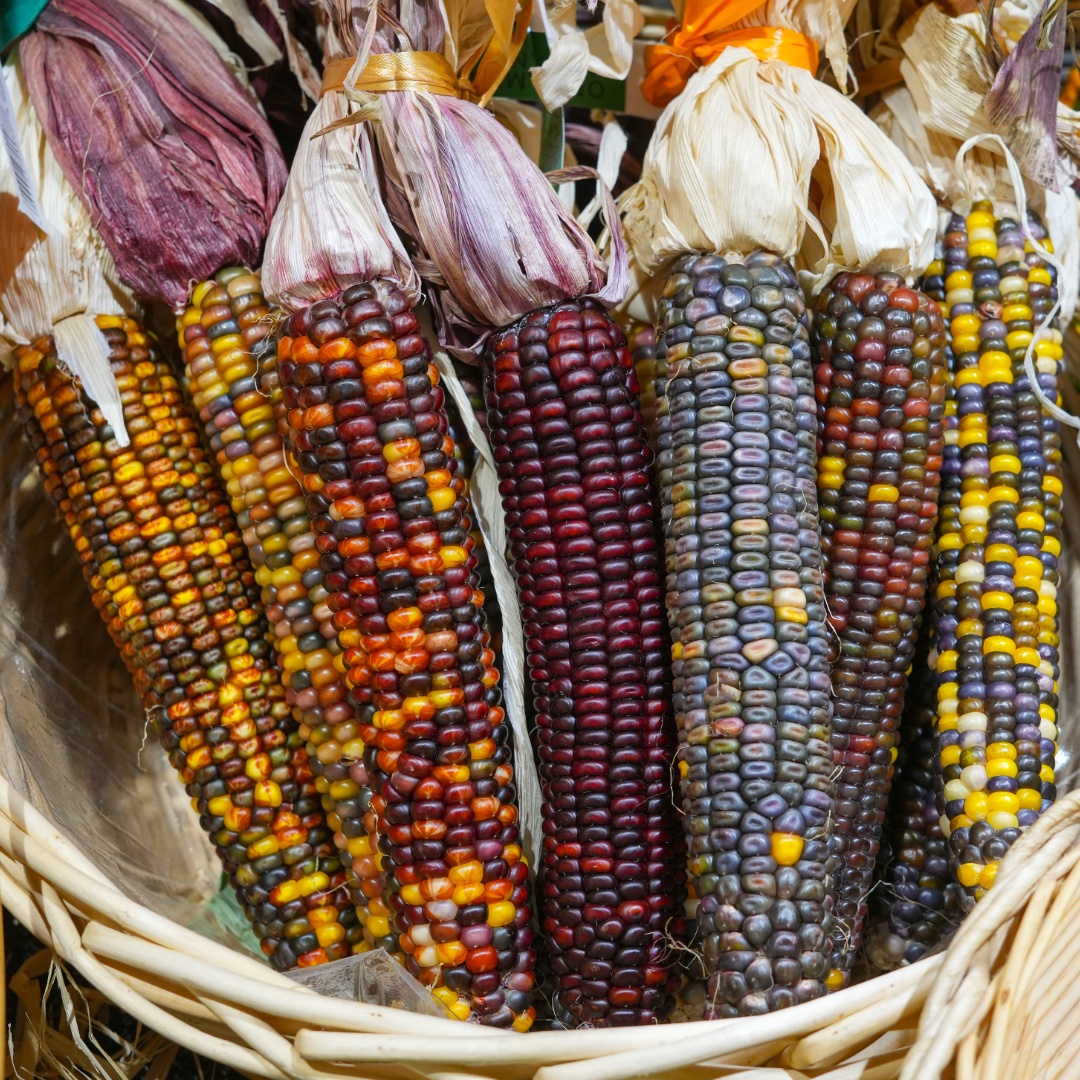
Corn
Maize, or Corn, is a tall stalky plant that can be harvested and eaten or processed into a grain. Originally domesticated in Mexico about 9,000 years ago from wild teosinte, this plant is a cornerstone of cuisine around the world, being the most sold plant on the planet for food, and biofuel.
Health Benefits:
Health Condition:
Cardiovascular Disease
Diabetes
Method of Use:
Ceremony
Ingest
Alternative Names:
Maize, Zea mays L.
Cultural Narrative
While corn is often described negatively in relation to the health impacts of contemporary monocultures and industrial agriculture (e.g. processing to make corn syrup), in its original form, corn is an important cultural and nutritional powerhouse for many Indigenous communities.
One participant described using corn pollen in prayer, and as an offering or blessing to the earth when she harvests her elderberries as a show of respect and a way to show her plants appreciation for the medicine they provide her
Another described the role of corn within the story of the three sisters. She described it as the mother reproducing and growing into a human, emphasizing that if we look at the shape and representation of corn, we can see her reflecting human physical features. She went on to explain how every single part of the plant can be used from creating baskets to cooking tamales. She explained that when cooked and processed using traditional methods, there are clear dietary benefits. For example, she described how in villages that follow traditional cultivating, harvesting, and cooking methods, many elders remain in good health well into old age.
Another community member described how he is teaching his children how to plan, cultivate, and harvest corn as he learned from his grandparents. Specifically, he described how he teaches his children how to treat the corn with care, affection, and intention, emphasizing the importance of knowing where and how to plant it. He described a feeling of joy witnessing his children learn and be drawn to tending corn and plants.
This information has not been evaluated by the FDA. This information is not intended to diagnose, treat, cure, or prevent any disease. This information should not be considered medical advice. Please consult your clinician before using any remedy. This is especially important if you are pregnant, nursing, or have any medical conditions.
References
Refs Zhang, C., Postma, J. A., York, L. M., & Lynch, J. P. (2014). Root foraging elicits niche complementarity-dependent yield advantage in the ancient ‘three sisters’ (maize/bean/squash) polyculture. Annals of Botany, 114(8), 1719–1733. https://doi.org/10.1093/aob/mcu191